
Romance scams
A familiar circle of names can still be one person
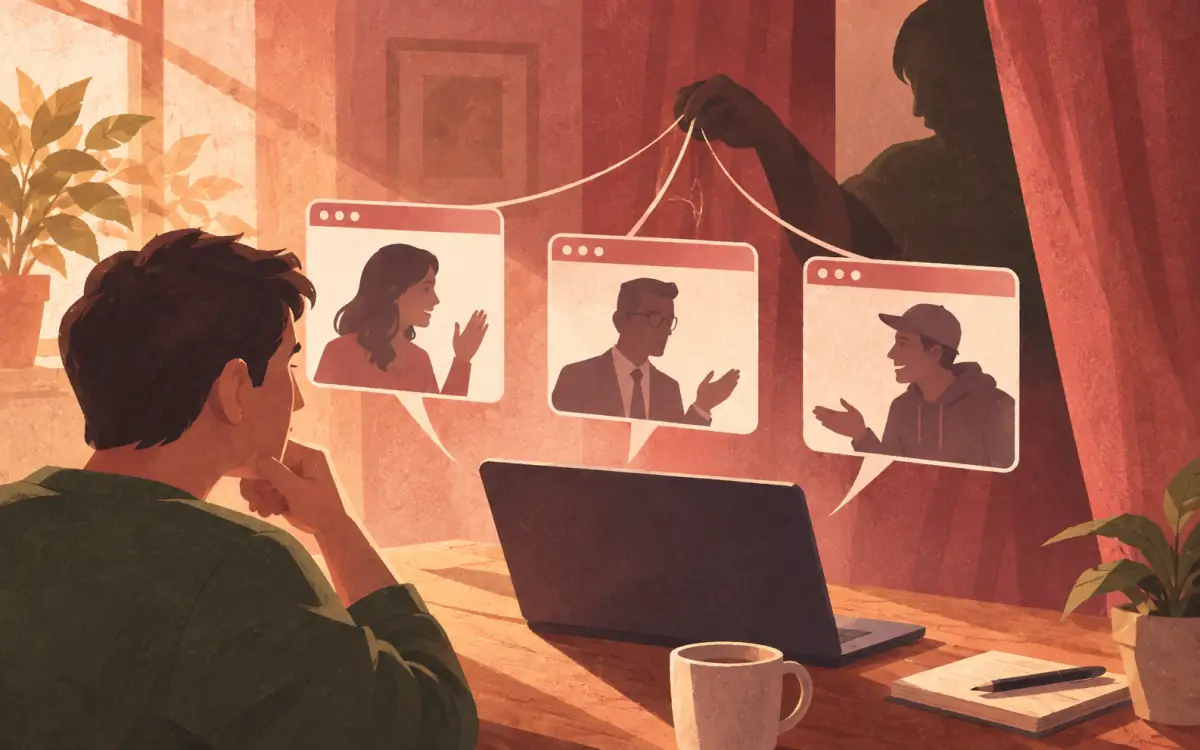
In an online romance scam, apparent friends and family may exist only inside the same private story. Learn how to check a connection without blaming yourself for trusting someone.
When someone online introduces you to a sister, an attorney, or a trusted friend, those extra names can make the relationship feel real. But people who appear only in the same private chat are not independent references.
In February 2026, Woman's World published Debby Montgomery Johnson's account of meeting a man online after her husband died. The relationship moved off a dating site and lasted two years. Apparent relatives and an attorney appeared in chats while he asked her to send money elsewhere. She reports losing $1 million.
More voices do not always mean more proof
A scammer can control the profile, the chat account, the story, and every introduction that follows. Several people agreeing with one another may be one person changing roles. Photos, video calls, confident biographies, or a shared religious interest can help a stranger feel familiar without proving who is asking for money.
The key question is whether a detail can be checked outside the relationship. A friend introduced by the person, a lawyer whose contact information the person supplies, or a relative on the same messaging app all remain part of that person's story until independently verified.
Move a financial decision into daylight
Do not send money, gifts, account access, or investments to someone you have not met in person. Be especially careful when the person asks you to pay a third party or leave the dating site for a private messaging service. Stop before any transfer and tell a friend or family member who is not connected to the online relationship.
If the person recommends an investment, check the offer and the professional through official sources. A romance and a financial opportunity can be woven together so closely that questioning the investment feels like questioning the relationship. They are separate decisions; you can care about someone and still refuse to send money.
Ask for help without shame
If you have already sent money, contact your bank, wire service, or payment company immediately and ask whether any action is possible. Report the account to the dating or social media service and to the FTC. Keep the conversation and payment records rather than deleting them.
If someone you care about is being targeted, start with concern, not a verdict about their judgment. Shame and secrecy can make it harder to step away. Ask what the person has been told to do next, and offer to verify that specific request together using contact information neither of you got from the online partner.
Practical lessons
Treat people introduced only through the same online partner as unverified.
Never send money or investment funds to an online love interest or someone they designate.
Bring an outside trusted person into a money decision before transferring anything.
Original sources
The supplied Woman's World URL slug says $2 million, but the current headline, subhead, and article body say $1 million. This post follows the article body; its reported details are Montgomery Johnson's account as told to the publication.
Practice a next step.
Work through a short scenario and rehearse a calm next step before you need one.
Try the free challenge